
[As Seen on Circular Economy] ChopValue Transforming a common utensil into materials under key manufacturing standards
![[As Seen on Circular Economy] ChopValue Transforming a common utensil into materials under key manufacturing standards](http://chopvalue.com/cdn/shop/articles/Newsroom_Banner_1920_x_1006_4_9e50c4c9-c5e8-4256-a8ac-f8914744c831_{width}x.png?v=1781811904)
![[As Seen on Circular Economy] ChopValue Transforming a common utensil into materials under key manufacturing standards](http://chopvalue.com/cdn/shop/articles/Newsroom_Banner_1920_x_1006_4_9e50c4c9-c5e8-4256-a8ac-f8914744c831_1024x1024.png?v=1781811904)
Circularity has become a popular topic. Yet amidst discussions about reducing waste, the natural value of items is often overlooked, especially when it comes to things considered "single-use."
With the right perspective, a little imagination, and a set of clear and responsible manufacturing standards, what once seemed worthy of being discarded can become something entirely new.
We spoke with Alison Lee, Global Marketing Director at ChopValue, about how this organization has been setting a circular manufacturing standard through its innovative transformation of an implement we’re all familiar with: disposable chopsticks.
What inspired your founder to start ChopValue and engage in developing circular economy practices?
ChopValue was inspired by a moment where values and reality clearly conflicted. While living in Vancouver, our Founder and CEO, Felix Böck, noticed how prominently sustainability featured in public conversation, yet how linear most everyday systems still were.
With that frustration, he set a clear goal: to prove that a viable business model could be built from overlooked resources, starting with something as simple and humble as the chopstick. Billions are used globally each year, often for a single meal. Despite being made from high-quality materials, they are typically discarded after one use.
What truly inspired ChopValue was the belief that manufacturing could be designed to give more back than it takes. For us, the circular economy goes beyond recycling. It calls for designing premium products built to last, keeping materials in use longer, retaining value within local communities by employing skilled woodworkers, and measuring environmental impact alongside economic performance.
From the beginning, our mission has been to prove that circular manufacturing can operate at commercial scale without compromising performance, design, or economic viability. To date, we have a global network spanning 10 countries, with more than 80 Microfactories operating and in development, demonstrating how localized production can scale internationally.
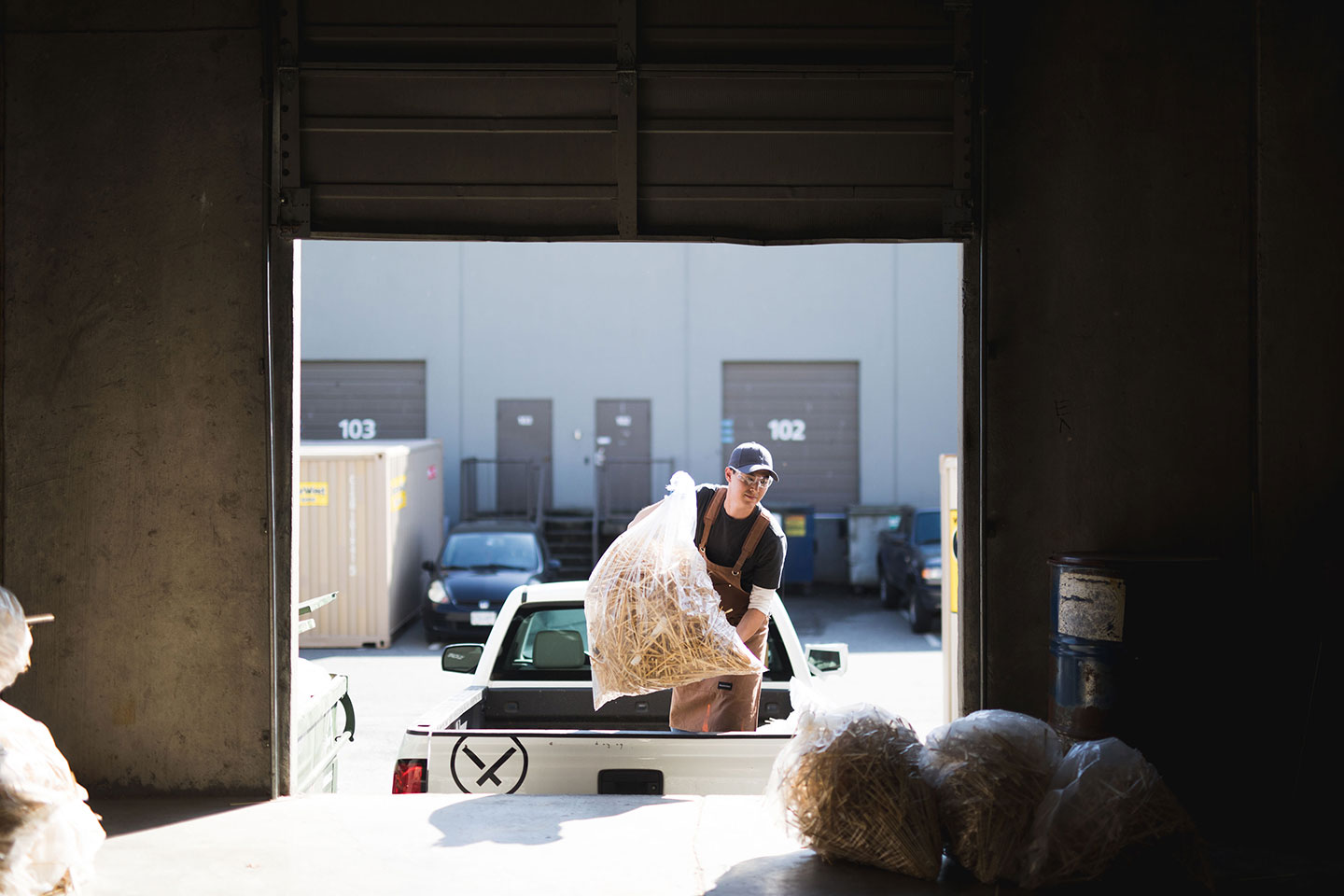
Why are responsible manufacturing standards important for advancing the circular economy, and how is ChopValue helping set those standards?
Responsible manufacturing standards are critical because the circular economy cannot scale without trust, consistency, and accountability. Without clear standards, circularity risks becoming a marketing concept rather than a measurable practice. Standards create a shared language for designers, manufacturers, clients, and regulators, making circular solutions easier to adopt and replicate.
We help set a standard by demonstrating that circular materials can meet the performance demands of hospitality, commercial, and public environments. Through consistent quality controls across our global Microfactory network, we ensure localized production delivers the same high standard of product quality and customer service around the world. This balance between decentralization and standardization is essential for moving circular manufacturing beyond pilots and into mainstream adoption.
What has been your biggest success in advancing a new circular standard, and what impact stories have surprised you?
One of our greatest successes has been proving that a distributed manufacturing model can scale globally while remaining locally rooted. Through our Microfactory network, we’ve transformed close to 300 million chopsticks into commercial-grade furniture and interior features, installed prominent, high-traffic spaces around the world, ranging from the World Expo 2025 in Osaka to tabletops that are dined on every day at A&W Canada.
It has also been extremely rewarding to see how strongly our work resonates with large organizations seeking practical ways to reduce their environmental footprint. Hospitality brands, global retailers, and corporate clients increasingly look for tangible, credible solutions aligned with their sustainability goals. Seeing circular materials perform in high-traffic commercial environments reinforces that sustainability and scale can coexist.
.jpg)
YVR Airport Purebread tables, made from 49,891 recycled chopsticks.
Equally impactful is how our franchise partners adapt the model to local contexts. Each Microfactory reflects its community, partnerships, and priorities, while contributing to a shared global mission. Many Microfactories have also become local hubs for education and engagement, where customers, students, and partners can witness waste being transformed into value-added engineered materials. That visibility builds shared responsibility and pride that extends beyond the product itself.
What challenges do you face in advancing the circular economy in your industry?
One of the main challenges is shifting long-standing perceptions around waste, value, and manufacturing. Many industries still rely on linear supply chains optimized for speed and cost, without accounting for environmental or social impacts. Introducing circular alternatives often requires rethinking procurement processes and design assumptions.
Another challenge is the perception that sustainable products don’t perform as well as their virgin counterparts. We continue to prove time and time again with our clients that our engineered solutions exceed expectations with properties that are stronger than oak and harder than maple, while being a solid material that can be refinished to extend its lifespan.
Collaboration across the value chain is also essential and complex. Circular solutions rely on coordination between designers, clients, and policymakers. In Japan, for example, we are working closely with the City of Kawasaki to rethink how waste is defined and regulated. The country’s system traditionally classifies materials strictly as either waste or valuable goods. Once labelled as waste, materials must be handled exclusively by licensed disposal companies.
Through our collaboration with the city, we received permission to collect chopsticks while jointly developing a clearer classification for underutilized resources. This work, expected to be finalized soon, would formally recognize materials like chopsticks as valuable resources rather than waste. Efforts like this highlight the time, trust, and shared learning required to align frameworks across stakeholders.
Are there upcoming initiatives or trends you are excited about?
We are actively looking for Pioneer Partners to embed Microfactories into their operations, unlocking new waste streams and turning underutilized materials into high-value, usable products, rather than a cost of disposal. These efforts build on the same principles that guide our work today: local sourcing, scalable manufacturing, and products designed for long-term use.
We envision a future where materials are selected not only for cost and aesthetics, but for their ability to remain in circulation and retain value over time.
Looking ahead, what are your hopes for the circular economy, and how can others contribute?
We hope the circular economy becomes a default expectation rather than a niche approach. This means circular principles embedded into procurement standards and product design processes, rather than treated as optional. We envision a future where materials are selected not only for cost and aesthetics, but for their ability to remain in circulation and retain value over time.
We aim to contribute by continuing to lead through action. By expanding our Microfactory network, deepening partnerships, and sharing our learnings openly, we hope to accelerate adoption across industries and regions. Local manufacturing, supported by strong systems and shared standards, can play a critical role in building a better, greener future.
Others can contribute by prioritizing circular materials in projects, collaborating across disciplines, and asking deeper questions about where materials come from and where they go. The circular economy is built through collective effort and a willingness to rethink how value is created. At its core, circularity is about responsibility to materials, to communities, and to future generations.